How I Use AI and Why I Think We Need to Learn to Grow With It
How I use AI for software, customer support, and business while relying on backups, human review, and practical guard rails.
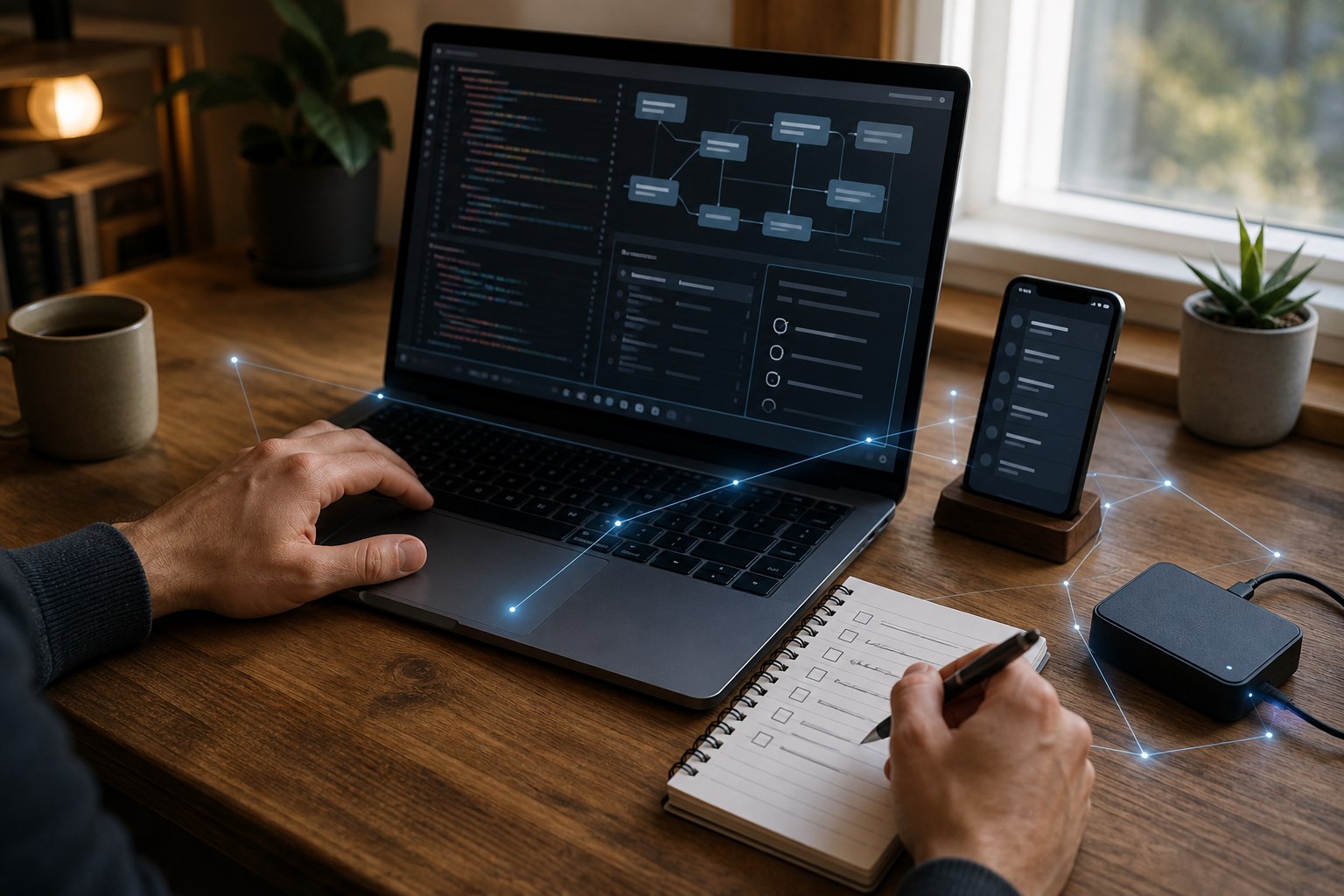
I use AI pretty much every day now. I have my laptop and my phone, and I use both of them, but I primarily use my Windows notebook. I have Codex installed, and I regularly have it taking a look at things like my email. I’ll direct it to look at specific emails to help me come up with answers to customer questions.
I also provide the AI access to parts of our code, or even specific customer databases, so it can do analysis and help me help the customers a lot faster.
But one thing that is important is that I always approve things before they get pushed to the server. We use GitHub, so it’s also not really so easy for something to be pushed to the server that we couldn’t back out of if there was a problem. That makes the whole process a little more fail-safe.
Beyond that, I’m using AI to upgrade our product. We have a new version of our Dance Studio Manager software coming out, hopefully in the near future, and AI has become a pretty important part of the development process.
Trusting AI, but putting guard rails around it
I would say I’ve become more confident in AI over time, but part of the reason I feel more confident is because of the caution that I exercise.
For example, I’ve used AI to help me create more backups. I don’t just have backups at the host. I also have backups in another place called Backblaze. When it comes to things like server access, we’ve set up more and more guard rails over time so that it’s not so easy for something to go awry.
So my confidence hasn’t really come from deciding that AI can’t make mistakes. It’s almost the opposite. I know it can make mistakes, and because of that I’ve tried to build systems where a mistake is less likely to become a disaster.
That distinction becomes especially important when other people are using AI.
It doesn’t necessarily mean that I don’t trust someone as a person, but I don’t just blanketly trust anyone to use AI to do something without them having demonstrated their knowledge.
A case in point is something I would eventually love to do with our own software. I would love to allow customers to use AI to do more things with their own databases and their own software.
But there’s a lot of destructiveness that is possible.
Someone might not consider some of the database relationships, for example, and they could destroy data without realizing what they were doing. It wasn’t on purpose. They just did something that got them into a much deeper problem.
That’s one reason I think educating people on how to use AI is going to be so important. It can be destructive if people don’t use it in the right way.
AI is also being used against us
There are bad actors out there too, and that creates another element to all of this.
In some ways, we almost need to use AI because the bad actors are already using AI against us.
One example would be all the WordPress exploits that are out there. People can use AI tools to help find vulnerabilities, not just in WordPress but in lots of different software. Then they send out bots that are all over the internet looking for these exploits.
The result is web servers being hacked and all kinds of other security situations.
So if we don’t use AI to help secure our own servers and software, there are certainly going to be bad actors out there that find us to be ideal targets.
That’s part of why I don’t really look at the AI itself as being the danger. A lot depends on who is using it, what they understand, and what they are trying to do with it.
Will AI take our jobs?
I think AI is going to cause a lot of turmoil in different ways, just like when the internet started to become big.
There certainly will be some jobs that become obsolete.
A good example from my own life is that I used to run a printing press. I worked for a printing company. That type of job still exists, but there are a lot fewer of those jobs than there were many years ago.
So yes, there will be jobs that are lost.
But I also think there are going to be a lot of jobs created, and the type of thing I do now is probably an example of what some of those jobs are going to look like.
I do analysis, I use AI, and then I follow through with actual work by the AI tool, but as an extension of myself.
I think that type of work is going to become a lot more common in the future.
And I’m sure people will be able to do a better job than they used to in many situations. I assume that will increase productivity, which hopefully leads to businesses growing and having the budget to hire more people.
So I don’t see it as being as simple as AI takes jobs or AI creates jobs. It’s going to do both.
AI as an extension of ourselves
One thing AI has shown me is how much I still don’t know.
And that actually continues to pique my curiosity and drive me to explore new areas and develop more things.
We all can do more with AI, at least in certain situations. I don’t know that AI can paint our house for us. But when it comes to things related to computers, the internet, our phones and so forth, it’s important to realize that AI can be an extension of ourselves and allow us to be more productive.
But that involves growing together with the tools that we use and knowing what they’re capable of doing, including bad things.
Some of that can involve a little trial and error and making some mistakes, just like anything else in life.
I definitely don’t think AI tools are designed to harm people. But I also don’t think that means we should use them without understanding what can go wrong.
How AI allowed me to take over something I had never done before
One of the best examples for me personally happened when we didn’t have a strong iOS and Android developer available on our team.
The person who had been doing that work was reaching a point where they couldn’t really manage it anymore because they had other assignments.
I had never worked with Android or iOS.
I had been working with software for years, but usually web apps.
What was amazing was that with AI I was able to take over those projects, get the Android and iOS libraries updated, get the apps up to date, and begin making regular updates for our customers really from zero.
But I think there’s an important qualification to that.
It wasn’t really zero experience.
I had spent time starting around 2023 working with AI. I knew how to use it, and I already had a wide knowledge of how software, websites, databases and servers connect together.
So it really was an amazing experience to be able to take over the iOS and Android projects and get them safe and dependable and much more manageable.
But I don’t want someone to read that and think they can install an AI tool on Monday and be an experienced software developer by Friday.
There is a difference between moving fast and knowing what you’re doing
It’s very easy to get involved in an AI project where things start out looking really great.
But there are a lot of guard rails that have to be put in place.
Sometimes AI can forget things that you told it earlier. Or it might assume something that you thought it knew and it didn’t.
Then it can take actions that are destructive to the project.
Or it can take you in a direction that really isn’t helpful and potentially send you back days or weeks recovering from what you did.
There’s that phrase now, “vibe coding.”
And it is a thing. People can do it.
But there’s a difference between someone who has worked in the business with software and websites and servers for many years and someone who is just walking into it.
It’s not always easy for someone to just jump in and take the reins on something like that.
You can move very fast with AI, but moving fast and knowing what you’re doing are not exactly the same thing.
My advice is to start small
For a business owner or someone who has been nervous about trying AI, my advice would really be pretty simple.
Choose a harness like Codex, Claude’s coding tools, Cursor, or something similar, install it on your computer, and start working with it a little bit every day.
It will grow on you over time.
You’ll make mistakes.
Start with little projects that are not important before you work on something serious.
And build your confidence perhaps over months or a year or two—not just a couple of weeks.
I think that’s the part that sometimes gets lost when people talk about AI.
It is incredibly powerful. It can allow us to do things we couldn’t have done before, or at least couldn’t have done nearly as quickly.
But learning how to use that power responsibly is part of the job too.